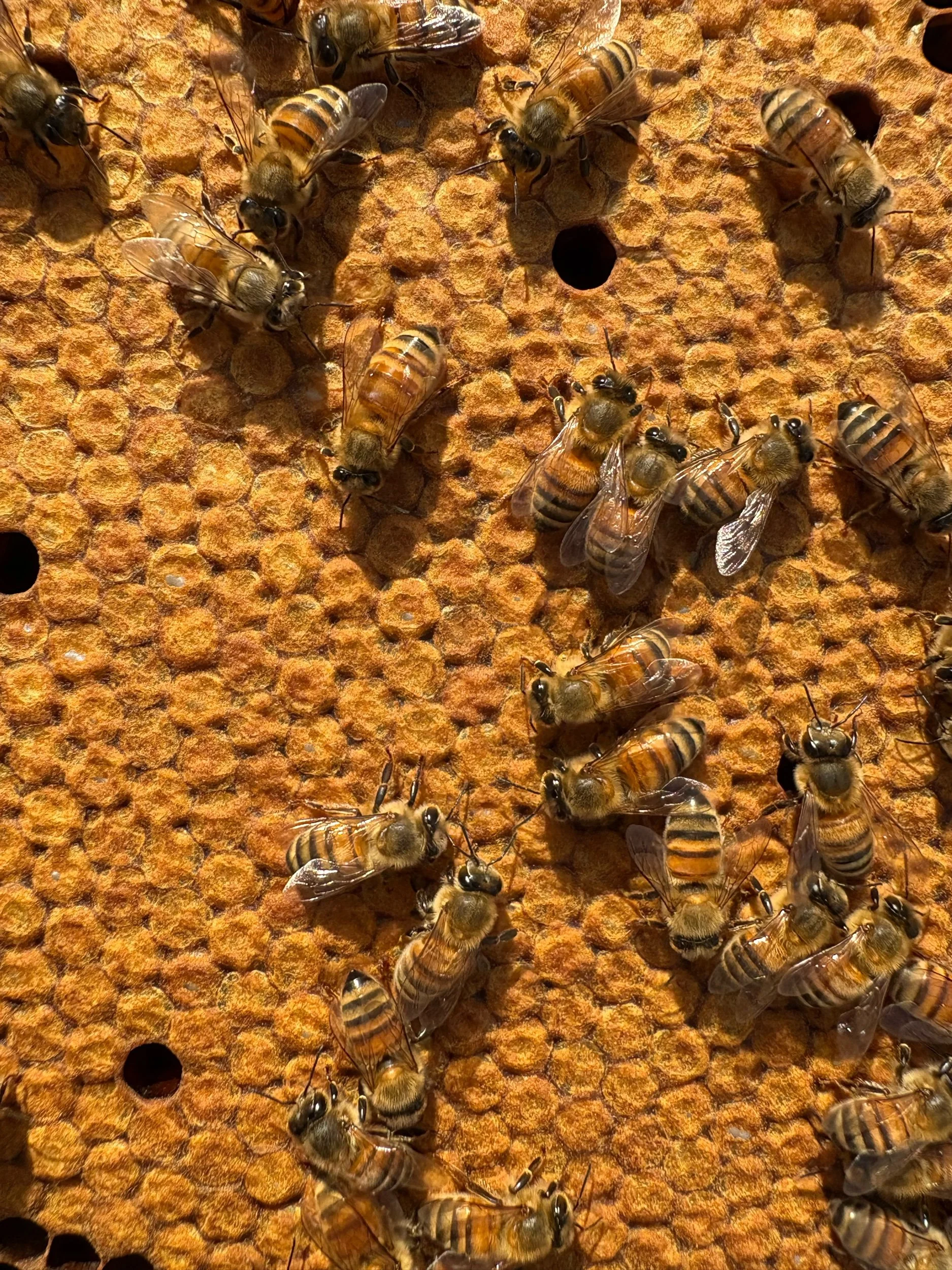
About our breeding & selection
The greatest threat, as we perceive it, to our honey bees is the varroa mite. Varroa mites transmit viruses and disease which can render a colony weak and underproductive. Although beekeepers may point to many scapegoats to blame for failing hives, it is our philosophy that the mite is to blame for the vast majority of hive death.
The logical answer would then be to treat your hives with miticides. There are organic acids (formic, oxalic, thymol) that can be applied and work very well given certain temporal parameters and synthetics that also have application restrictions. Medicating bees for varroa mites is costly, labor intensive, and fraught with challenges on how and what to treat with, and reading the manufacturer instructions is essential to use the products effectively.
Do we treat our bees? The short answer is Yes, and with treatments in the “organic acids” class that we generally regard as safe and effective. However there are some caveats to this answer. We have begun a more rigorous breeding program where we are incorporating mite resistant stock that is consistently tested and graded. We begin with queen cells we graft from mite resistant breeders. These queen cells are placed in nucs and splits that are open mated in areas we flood with our selected drone colonies that will supply the paternal lineage. Once mated, we carefully monitor the daughters for various parameters and hold off on treatments until they fail our testing. We must keep their records organized carefully for the rest of the season. The hives that do not pass our testing methods (mite washes, Harbo assay, and screening for gentleness and honey production) are treated and removed from the breeding program. At the beginning of the season we may start with 400 hives and whittle them down to 20 hives or even less.
The dream we are pursuing through all of this effort is a bee that we know can keep mites reasonably low, that is gentle and easy to work, that produces honey, and winters well. We do not anticipate a 100% treatment free bee every time, but we know that there is magic out there worth finding. If we can apply organic miticides less and less as our breeding improves, we will be actively achieving our goal. We do not believe in or condone the “Bond” method - or “live and let die.” Careful monitoring and meticulous data collection are a huge part of this process and we don’t believe it is very ethical without this undertaking.
We hope that you enjoy our bees and our philosophy and we are always open to feedback regarding our stock you receive! We hope to improve what we offer each year with bees that perform well for your operation.
Thanks for reading about our bees and breeding program!