A sweet journey…
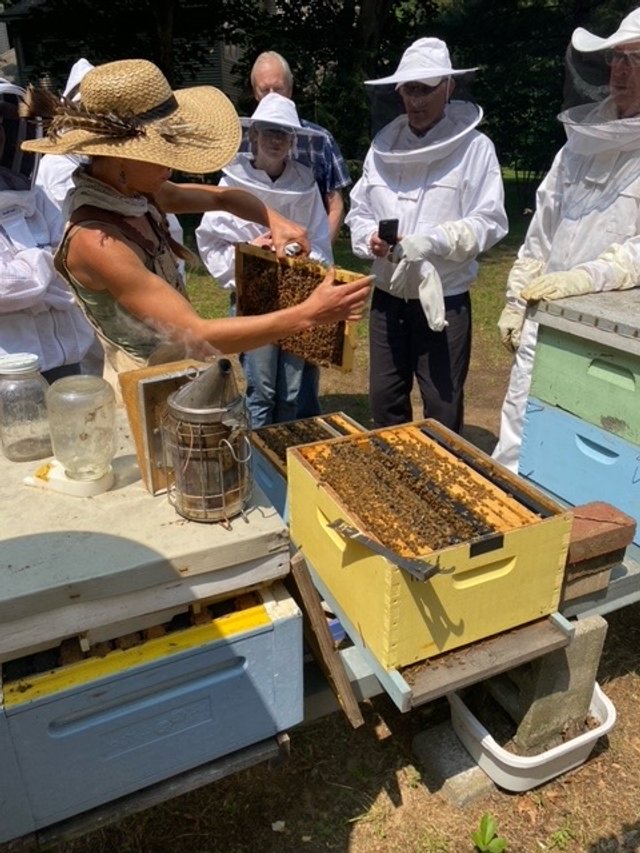
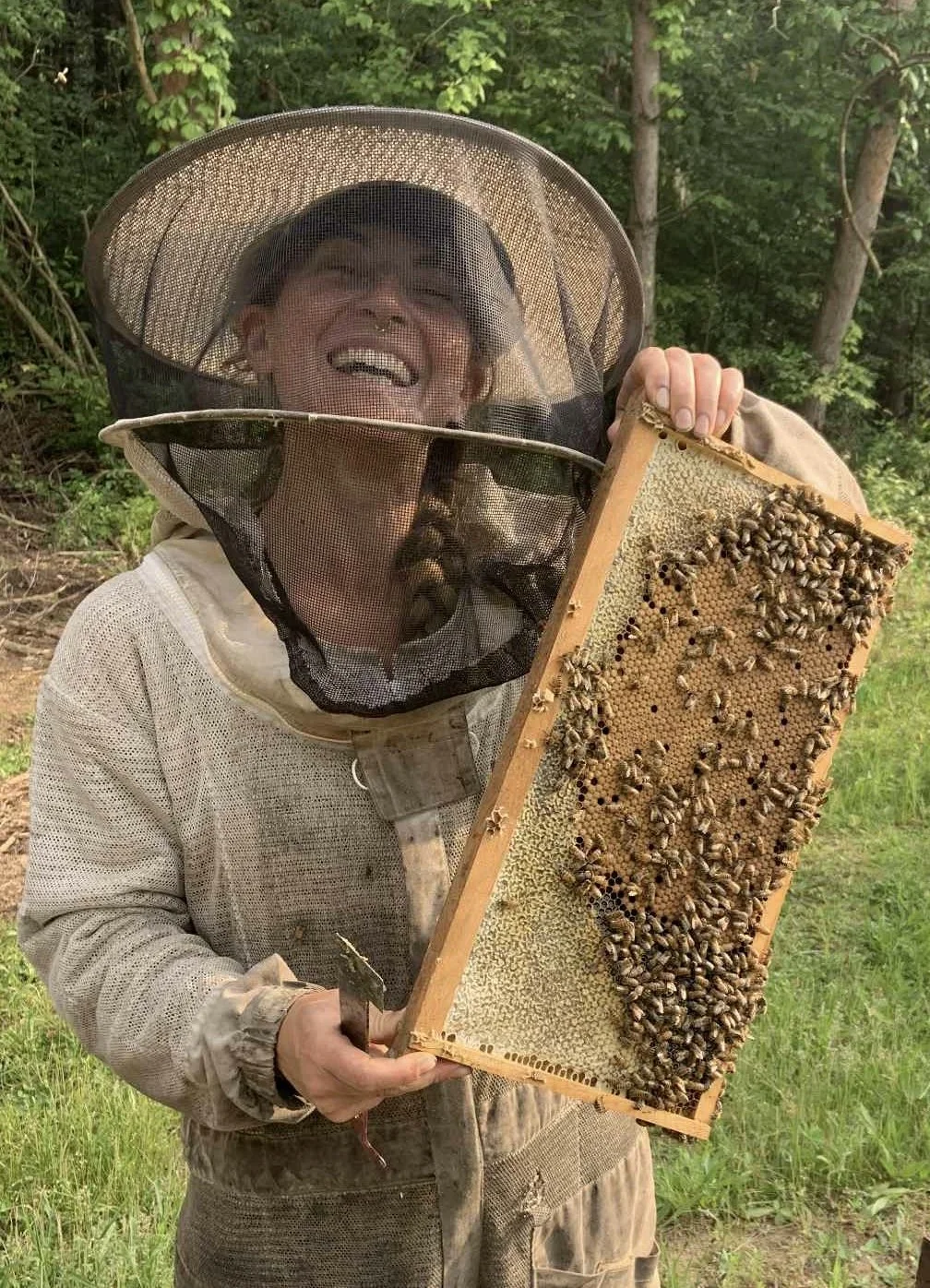
The business: Grassroots Honey LLC is a bee business in the making by Shaana Way (me!) and the home farm is located in Galesburg, Michigan. At present I keep around 300 hives for honey and 100-200 for nuc and queen production. I love crafting with wax, experimenting with new products, and sharing the fascinating world of bees with others. I have a passion for learning which has come in handy in a constantly changing industry.
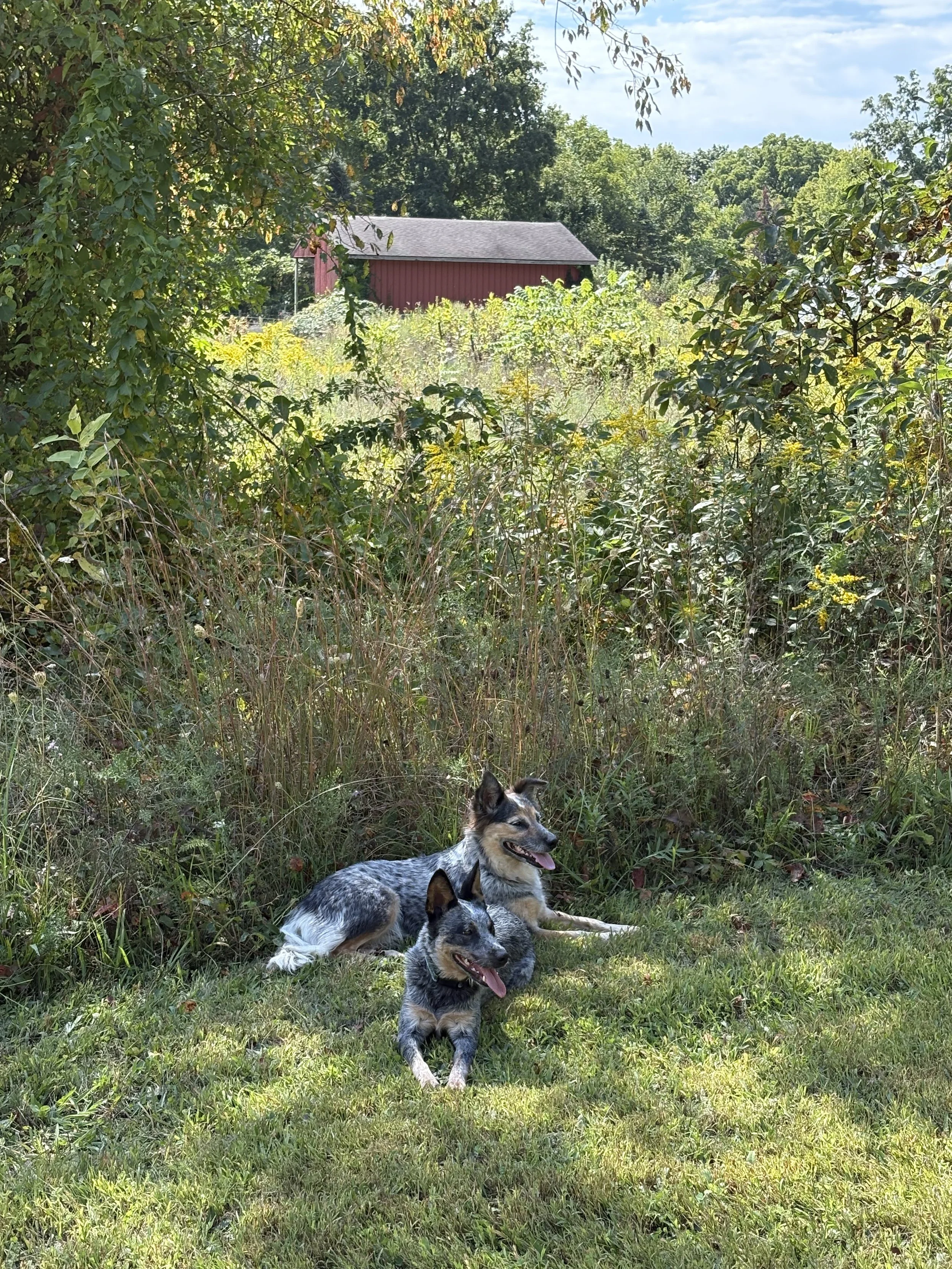
In addition to bees, my fiancé Matt and I also keep goats, chickens, ducks, guineas, and two heeler pups. All animals on the farm have botanical names - our dogs are named Maple and Linden for two tree species that are essential to bees! We live in a home that was initially constructed in 1870 so when we have spare time you can usually find us doing home renovations and upgrades.
How I beegan: I studied biology with a focus in ecology at Western Michigan University and found myself fascinated by the critical roles insects perform for our ecosystem as well as in agriculture. In the summer of 2014 I worked as a research intern for the Kalamazoo Nature Center where we monitored conservation efforts for the Mitchell’s Satyr (Neonympha mitchelli mitchelli), a state protected butterfly species, as well as many other protected species in rare habitats. During that summer I had my first experience with honey bees when some friends brought me to the college apiary at Western Michigan University. This moment changed my life forever - I realized beekeeping was the multifaceted culmination of my diverse interests - ecology, botany, animal husbandry, crafting, community, and an emerging field of endless research questions.
From the lab to the farm: The next summer I got a job working for the Isaacs Lab at Michigan State University on their Operation Pollinator project and other studies conducted in commercial blueberry pollination in West Michigan. This experience gave me knowledge and a deeper appreciation for native bee species and their life cycles, and showed me the essential role that honey bees play in the cultivation of berry crops. It was while with the Isaacs Lab that I met Dr. Meghan Milbrath who hired me as her intern for her beekeeping operation the next summer. During that time I learned quickly about the great challenges beekeepers face, from chemical exposure, to disease, to the mountain of work that needs to be done each day, sunup to sundown. Meghan was the first person to teach me to graft queens, and I realized I had a passion and a bottomless well of energy for this niche.
The years that followed once I was done with college brought me to several organic farms in West Michigan where I lived and worked while slowly collecting hives from swarms, cutouts, and subsequent splits. I started putting bees at other farms in my community and selling the honey at market. I have made every mistake in the book, I know that education is very expensive! However every experience, whether it was sweet or stung me, built upon my knowledge and helped me choose my next direction.
Buzzing across the world: Through my mid-20s I became obsessed with travel and exposure to new ideas, cultures, and ways of life. Each winter for a few years I would save as much money as I could from farm work and various gigs I had to travel to parts of the world that were relatively cheap to visit and experience. I would book the cheapest (and sometimes worst) flights, stay in hostels, eat street food, and explore new places by foot, a rented bicycle, or scooter. I learned that one can see a lot for very little if you are willing to be frugal and “rough it” sometimes - personally I found these experiences more interesting and full of opportunity that an expensive excursion! The people I met on these adventures shaped my perceptions of life and the world. Each place I visited I would have a loose agenda that I knew I wanted to see bees and meet beekeepers if I could. While in Thailand I learned the word for bee, phueng, and sought out beekeepers to spend time with in their yards and learn about their management styles. At this time we in the western hemisphere are just become aware of the Tropilaelaps mite and I was eager to see it with my own eyes, however I never did to my surprise. Even in my experiences in Cambodia seeing Apis dorsata, the giant honey bee, which this mite is coevolved with, the beekeepers never mentioned it.
I have visited Nicaragua, Honduras, El Salvador, Guatemala, Mexico, Canada, Thailand, Laos, Cambodia, Vietnam, Spain, Italy, France, Dominican Republic, Jamaica, and Chile, not counting layovers!
In 2018 I began volunteering for the USAID Farmer to Farmer program where I visited and taught queen rearing to various communities and bee associations in the Dominican Republic and Jamaica the following year. I will never forget the kindness these communities showed me and we were bonded by our great love and obsession with honey bees.
Buzzing stateside (and in a van down by the river): Since the Covid pandemic I have focused on domestic experiences working with beekeepers in operations in Michigan and other states. I began migrating with my bees to the south and sought work opportunities with commercial beekeepers raising queens at scale. Similar to my journeys abroad I sometimes was “roughing it” - living out of my 2009 Toyota Sienna I outfitted with a platform, mattress topper, and storage underneath. A camp gas burner, a truck stop shower, and a safe place to sleep was all I needed. Although I have a farm that I love in Michigan, I do appreciate the minimalism and simplicity of van life and that I could go anywhere and pursue anything as long as I had the gas to get there!
In 2023 I sent my first bees to California with a friend that was a trucker at the time. We collaborated in making this dream happen using his bees, mine, and another beekeeper. While the bees pollinated almonds, I worked the winter and spring at Proffitt Apiaries making splits and queens in South Georgia. The following winter I brought my bees to Southern Mississippi and sent them to pollination from there. Once the bees arrived on the west coast, I began my journey to California with a few job opportunities in mind. I spent part of January working for Josh Robison and his family helping to place bees in the orchards and helping out at various operations whenever I could to get more exposure to every aspect of the bee rodeo that happens in California every year. Most people don’t realize that the work is a grueling grind - bad weather, long nights, mud, broken trucks and forklifts are all part of it. My friend and I spent a few hours on a dark rural road with a load of 72 hives in a broken down Freightliner that wouldn’t release its air brakes, calling every mobile mechanic in the county until we eventually were able to limp it back to the shop, unload, reload, and take a different truck. Once placement was wrapped up, I began grading hives in the almonds for Pollination Connection. In March I began the journey back towards Mississippi, meeting beekeepers along the way, and took a job at a mom-and-pop operation in the Mississippi Delta splitting every day for two weeks. I worked thousands of hives, met some incredibly inspiring people, was shown generous kindness and hospitality on my travels.
Bringing things to present day, I work part time conducting independent research projects, raising queens, and working in the field for St. Joe Valley Apiaries, a commercial operation based in Three Rivers, Michigan. It’s amazing to have the opportunity to work alongside a grown and mature company to show me the ropes of commercial beekeeping while I grow my own young company. We are expanding into the development of a more rigorous queen breeding program where we select mite resistant and highly productive bees. It is my hope to take everything I have learned from these experiences to fine tune what I can offer my community. Thank you for reading this little snippet of my story - stay tuned for the next chapter!